

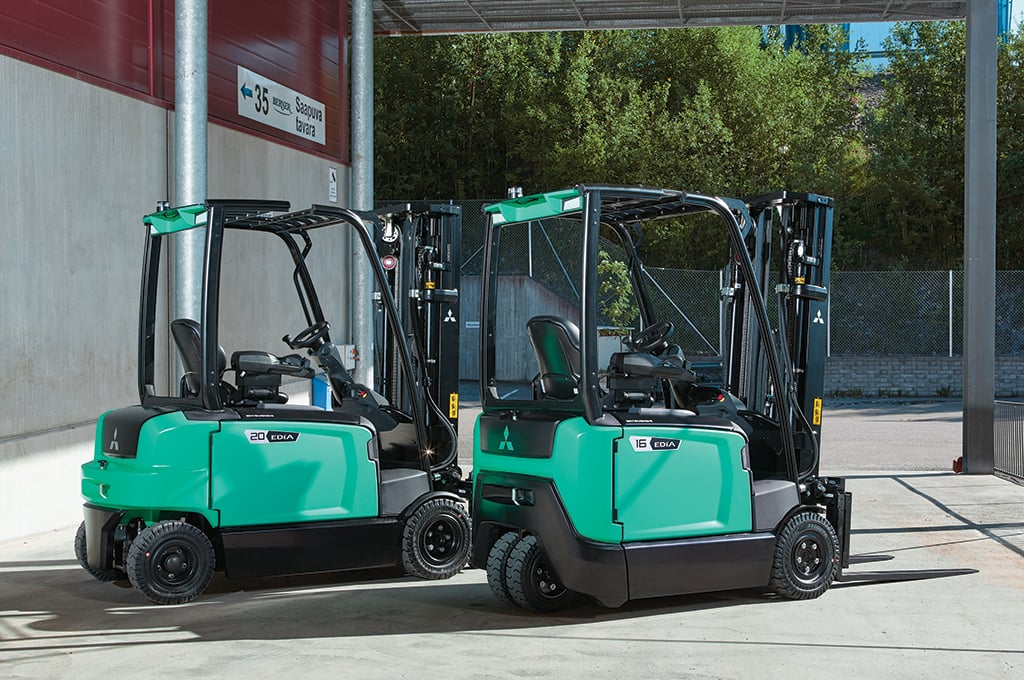
If you’re looking to add a forklift to your operation, one of the first decisions you’ll face is whether to hire or buy. It sounds straightforward, but the right answer depends on several factors that are specific to your business. Your budget, how long you need the equipment, how much flexibility you require, and what your appetite is for ongoing maintenance responsibilities.
At Alcor Handling Solutions, we’ve been helping North East businesses make this decision for over 40 years. There is no universal right answer, but there is almost always a better answer for your particular situation. This guide breaks down both options honestly so you can make an informed choice.
What forklift truck hire actually means
Hiring means the truck turns up, you use it, and you pay a regular fee for the privilege. That’s the stripped-back version. You’re not buying the machine and you’re not responsible for what happens to it at the end of the agreement. Hand it back, keep it on, or swap it for something else.
Where it gets more nuanced is the type of hire. Some businesses need a truck for a few weeks to cover a seasonal spike or while an owned machine is being repaired. Others want a fully managed fleet on a multi-year agreement without the capital commitment of buying. Both are valid. The right one depends on how your business actually operates day to day, not how it looks on paper.
One thing worth knowing upfront: a decent hire agreement includes maintenance. We’ll get to why that’s more significant than it sounds.
What buying a forklift means in practice
You pay for it, it’s yours, end of story. No monthly payments hanging over you, no supplier to answer to, no inspection at the end of a contract term. For businesses that know exactly what they need and plan to use the same machine heavily for years, that straightforwardness is genuinely attractive.
What people sometimes underestimate is the baggage that comes with ownership. The servicing, the LOLER inspections, the repair bills when something goes wrong, and the question of what you do with the machine when it’s eventually worn out. None of those things are dealbreakers, but they do need someone in your business to own them.
Leasing is a middle ground that’s worth a mention. You spread the cost, you get a dedicated machine, and the monthly figures are easier to stomach than a large upfront payment. Just read the small print carefully. End-of-contract terms vary a lot between providers and can catch businesses off guard.
The case for forklift truck hire
Flexibility when your needs change
Business requirements change. A contract wins, a busy season arrives, or a key piece of equipment goes in for repair and you need a temporary replacement quickly. Forklift truck hire gives you the ability to scale your fleet up or down without the financial commitment of purchasing additional machines.
This flexibility is particularly valuable for businesses in construction, retail distribution, and manufacturing, where workloads can shift significantly across the year.
Lower upfront costs
Buying a forklift outright requires a substantial capital investment. A new counterbalance truck from a leading manufacturer such as Mitsubishi can run to tens of thousands of pounds. For smaller businesses or those managing tight cash flow, committing that level of capital to a single asset is not always practical.
Forklift truck hire spreads the cost into manageable monthly payments, freeing up capital for other areas of the business. It also makes budgeting more predictable, because your costs are fixed for the duration of the agreement.
Maintenance and compliance included
One of the most overlooked advantages of hiring is what comes with it. A good hire agreement includes a planned maintenance programme and ensures the equipment meets its legal inspection requirements under LOLER. That means fewer unexpected repair bills, less administrative burden on your team, and greater confidence that your fleet is compliant.
For businesses without a dedicated maintenance resource, this alone can make hire the more practical option. As we covered in our guide to forklift safety in the workplace, keeping equipment in good mechanical condition is not just good practice. It is a legal requirement.
Access to newer equipment
When you hire, you’re not locked into an ageing asset. At the end of a hire term, you can upgrade to a newer model with the latest technology, better energy efficiency, or a different specification that better suits how your operation has evolved. Owned equipment, by contrast, depreciates over time and can become costly to maintain as it ages.
The case for buying a forklift
Long-term cost efficiency
If you have a stable, predictable need for the same type of forklift over many years, buying will almost always cost less in the long run than hiring. Once the machine is paid for, your only ongoing costs are maintenance and inspections. For high-utilisation operations where the same truck runs day in, day out for a decade or more, ownership makes strong financial sense.
The asset is yours
Ownership gives you complete control. There are no contract terms to navigate, no restrictions on usage, and no end-of-hire condition assessments. You can modify the equipment if needed, use it across multiple sites, and make decisions about its future without reference to a supplier.
For businesses with a strong balance sheet and a long-term outlook, ownership also carries balance sheet benefits that a hire arrangement does not.
Stability and familiarity
When your team works with the same machine over a long period, they develop familiarity with it. That can have genuine operational benefits, particularly in environments where operators are handling complex or high-value loads. There is something to be said for knowing exactly how a specific truck behaves.
Key questions to ask before you decide
The hire versus buy decision comes down to a handful of practical questions. Working through these honestly will point you toward the right answer.
How long do you need the equipment? If it’s less than two years, hire almost always makes more sense. Beyond that, the comparison becomes closer and depends on utilisation.
How predictable is your workload? Seasonal or project-based demand suits hire. Consistent, year-round use suits ownership.
What is your maintenance capability? If you have the resource to manage servicing in-house, ownership is more viable. If not, a hire package that includes maintenance removes a significant headache.
What is your capital position? Businesses managing cash flow carefully will generally benefit from the predictability of hire. Those with available capital and a long-term stable need may prefer the economics of ownership.
How likely are your requirements to change? If the type of truck you need today may not be the type you need in three years, hire gives you an exit route that ownership does not.
What four decades of North East experience has taught us
In our experience working with businesses across Newcastle, Sunderland, and the wider North East, most operations that are scaling or evolving tend to favour hire for the flexibility it provides. Established businesses with large, stable fleets often use a combination: owning their core machines while hiring to cover peaks or specialist requirements.
There is no shame in a mixed approach. In fact, it’s often the smartest one. You get the long-term cost benefits of ownership where your needs are predictable, and the flexibility of hire where they are not.
For a broader view of what a well-equipped operation looks like, our guide to warehouse equipment for the North East covers the full picture beyond the forklift itself.
Speak to the North East’s forklift specialists
Whether you’re looking for a single truck on a short-term basis or a fully managed long-term hire fleet, Alcor Handling Solutions has the range and experience to match you with the right solution. We supply Mitsubishi forklift trucks alongside a broad range of other leading brands, with hire agreements structured around your operational and financial requirements.
We’ll always give you an honest recommendation. If buying makes more sense for your situation, we’ll tell you. If hire is the better fit, we’ll put together an agreement that works for your budget and your business.
Get in touch with the Alcor team today to discuss your forklift truck hire requirements. We’re happy to talk through your options and find the right approach for your site.