

If you run a warehouse where space is tight, you have probably already felt the frustration. Aisles that are too narrow for a standard forklift. Racking that could go higher but can’t because you can’t get a truck close enough. Floor space that isn’t being used because the equipment you have simply can’t reach it.
An articulated forklift truck is built to solve exactly that problem. It is one of the most practical innovations in warehouse handling, and for the right operation it can fundamentally change how much you get out of your existing space. This guide explains what an articulated forklift is, how it works, and how to know whether your warehouse would benefit from one.
What is an articulated forklift truck?
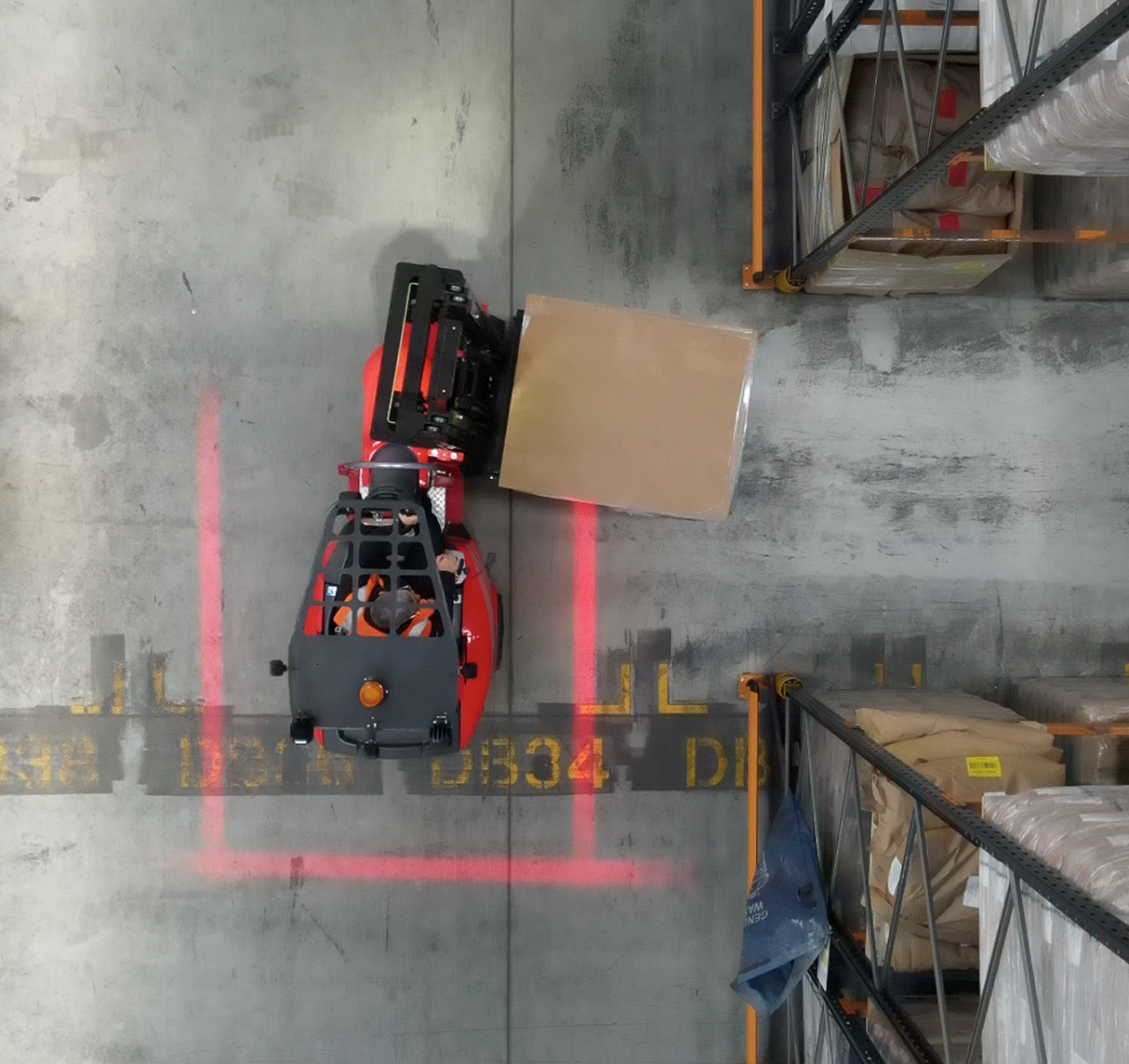
An articulated forklift truck is designed to operate in very narrow aisles. Unlike a conventional counterbalance forklift, which needs a wide turning circle to place loads into racking, an articulated truck has a joint in the middle of its body. That means the rear of the truck stays in the aisle while the front section and forks pivot sideways to deposit or retrieve a pallet.
The result is a machine that can do the job of both a counterbalance truck and a reach truck in a single unit, while working in aisle widths that neither of those machines could manage alone.
At Alcor, we supply two of the leading articulated forklift brands: Flexi NarrowAisle and Combilift Aislemaster. By offering both, we can cater to all customer requirements, matching the right machine to each individual site rather than offering a one-size-fits-all solution. Both are proven performers in narrow aisle environments, and the choice between them comes down to your specific operational needs.
How does an articulated forklift differ from a standard forklift?
A standard counterbalance forklift is a versatile machine. It works well in open yards, loading bays, and warehouses with wide aisles. But it needs space to turn, typically around three metres or more of aisle width to place a pallet in racking. In a warehouse where every square metre counts, that turning space represents storage you cannot use.
Reach trucks close some of that gap. They are designed for warehouse use and can operate in narrower aisles than a counterbalance truck. But they are generally limited to indoor use on smooth, level floors, and they still require more aisle width than an articulated machine.
An articulated forklift can work in aisles as narrow as 1.6 metres in some configurations. It can also transition between indoor racking and outdoor yard work in a way that a reach truck cannot, making it a genuinely versatile single-machine solution for operations that need both.
Flexi NarrowAisle and Combilift Aislemaster: what is the difference?
Both brands are well-regarded in the articulated forklift market and both solve the same core problem. The differences come down to specific configurations, load capacities, and how each machine suits different site conditions and operational requirements.
The Flexi NarrowAisle range is one of the most widely recognised names in articulated forklift trucks. Flexi machines are known for their manoeuvrability in very tight spaces and their ability to move between indoor and outdoor environments without needing a dedicated machine for each.
The Combilift Aislemaster brings its own strengths, particularly in operations handling longer or more awkward loads, and in environments where the layout or floor specification suits its particular design. Combilift has a strong reputation for engineering quality and for producing machines that work well in demanding conditions.
Stocking both brands means Alcor can make a genuine recommendation based on what your operation actually needs, rather than defaulting to a single option regardless of fit. That matters when you are making a decision that affects how your warehouse performs every day.
What are the main advantages of an articulated forklift?
More storage from the same footprint
This is the headline benefit. By reducing the aisle width you need between racking runs, an articulated forklift allows you to fit significantly more racking into your warehouse without extending the building. For businesses paying rent or rates on warehouse space, that translates directly into cost savings or capacity gains without moving premises.
Some operations report increasing their storage density considerably after switching to an articulated truck and reconfiguring their racking layout. The exact figure depends on your current aisle widths and building dimensions, but the principle holds across most warehouse configurations. For a broader view of how equipment choice affects your overall warehouse setup, our guide to warehouse equipment for the North East covers the full picture.
One truck, multiple environments
Most narrow aisle solutions are indoor-only. An articulated forklift is different. Its robust build and tyre options mean it can handle outdoor yard work as well as internal racking operations, moving between the two without needing a separate machine for each environment.
For smaller operations that cannot justify maintaining two different truck types, this flexibility has real practical and financial value. As we explored in our guide to forklift truck hire vs buying, reducing the number of machines in your fleet while maintaining capability is one of the most effective ways to manage equipment costs.
Reduced building costs
If you are designing a new warehouse or considering a racking reconfiguration, specifying an articulated forklift from the outset allows you to build or fit out with narrower aisles. That means more racking bays per square metre, a smaller building footprint for the same storage capacity, and lower construction or fit-out costs overall.
What are the limitations of an articulated forklift?
No machine is right for every situation, and it is worth being clear about where an articulated forklift is not the best choice.
These trucks are at their best in operations with defined racking layouts and relatively consistent load types. If your warehouse handles irregularly shaped loads, very heavy pallets, or requires constant movement across wide open areas, a conventional counterbalance truck may still be the more practical primary machine.
Operator training is also an important consideration. Articulated forklifts handle differently from standard trucks and require specific training to operate safely. As we covered in our guide to forklift safety in the workplace, using equipment correctly is just as important as choosing the right equipment in the first place. Our RTITB-accredited forklift training covers the full range of truck types, including articulated machines, so your operators can be properly qualified before they get behind the wheel.
Floor condition matters too. Articulated forklifts perform best on well-maintained, level warehouse floors. Uneven or damaged surfaces affect both performance and safety.
Which warehouses benefit most from an articulated forklift?
The operations that tend to get the most from an articulated forklift share a few common characteristics. Space is at a premium, whether because the building is genuinely tight or because the business has grown and the warehouse has not kept up. The product range is relatively consistent in terms of pallet size and weight. And there is a mix of indoor racking and outdoor yard activity that makes a single versatile machine more attractive than two specialist ones.
Industries where articulated forklifts are particularly common include food and drink distribution, retail logistics, building materials, and general warehousing. If your operation falls into any of those categories and your aisles are wider than they need to be, it is worth exploring whether an articulated truck could free up space you are currently leaving on the table.
Buying or hiring an articulated forklift
As with any forklift, the decision between buying and hiring depends on your operational needs, budget, and how long you expect to need the machine.
Articulated forklifts represent a meaningful capital investment if purchased outright, but the storage gains they unlock often justify that cost relatively quickly.
For businesses that want to trial an articulated configuration before committing, or that need one to cover a specific project or period of growth, hire is a sensible option. Alcor offers both purchase and hire across our forklift equipment range, with servicing and maintenance packages available to keep your machine running reliably.
Talk to Alcor about articulated forklifts in the North East
If you think an articulated forklift could work for your warehouse, the best starting point is a conversation about your specific site. Aisle widths, racking height, floor condition, load types, and how your operation flows day to day all affect whether a Flexi NarrowAisle or Combilift Aislemaster is the right fit and which specification makes sense.
At Alcor, we have been helping North East businesses make exactly these kinds of decisions for over 40 years. Supplying both the Flexi and Combilift brands means we can cover all customer requirements and make a genuine recommendation based on your operation rather than our stock.
Get in touch with the Alcor team to discuss whether an articulated forklift is the right move for your warehouse. We are happy to visit your site and give you a no-obligation assessment.