

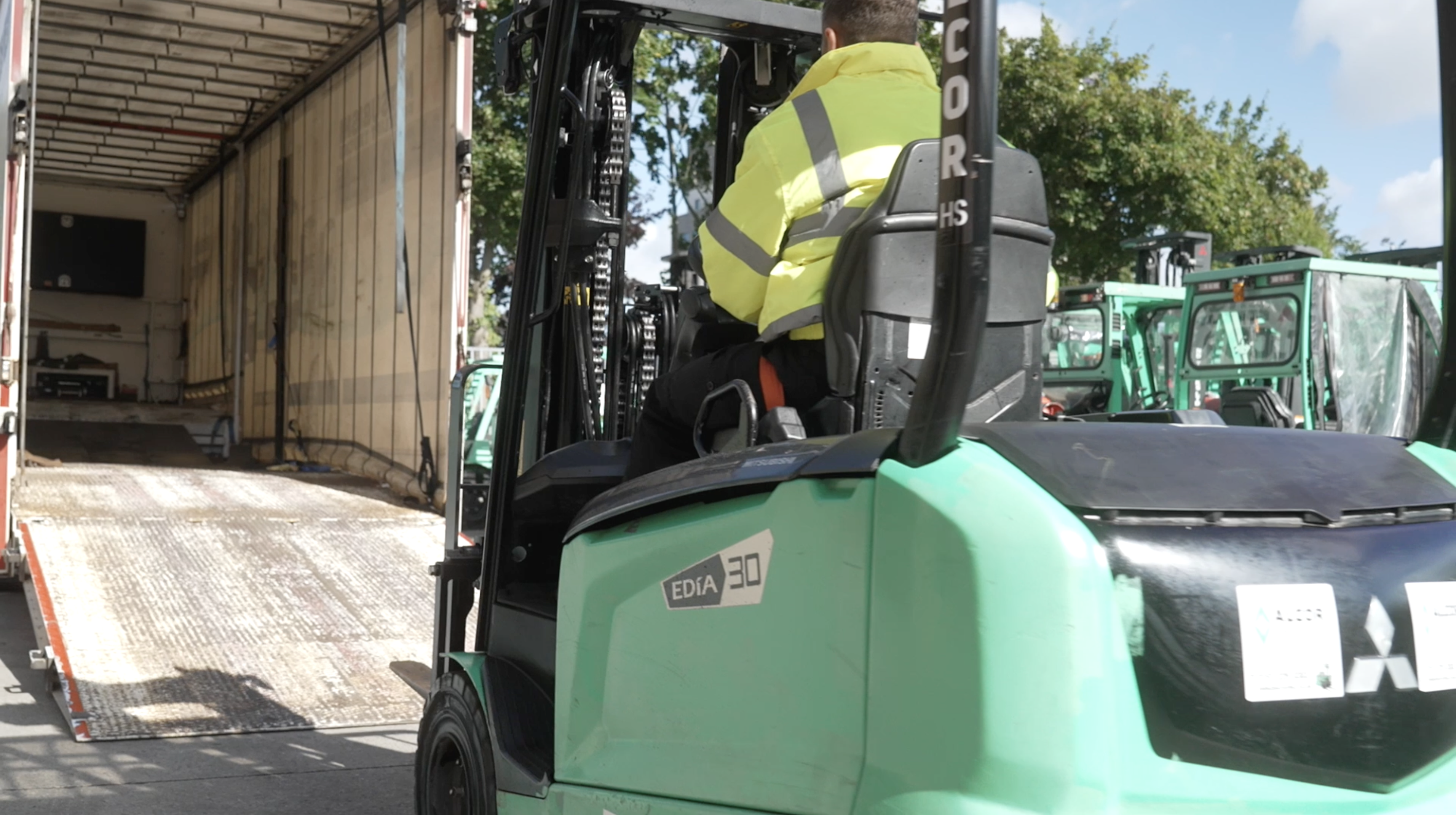
It is one of the most common questions we get asked at Alcor. You are looking at your forklift fleet, a machine needs replacing, and suddenly you are weighing up options you might not have considered before. Do you stick with what you know, gas or diesel, or is now the right time to make the switch to electric?
There is no single right answer. The best choice depends on your environment, your usage patterns, your budget, and how your operation is likely to evolve over the next few years. What we can do is give you an honest breakdown of each option so you can make the decision with confidence.
How each power type works
Before comparing them, it helps to understand what you are actually choosing between.
Electric forklifts are powered by a battery, typically lead-acid or lithium-ion. The battery is charged when the truck is not in use and powers an electric motor that drives the truck and operates the hydraulics. No fuel, no exhaust, no combustion.
LPG (gas) forklifts run on liquefied petroleum gas from a cylinder attached to the truck. The engine works similarly to a petrol engine, burning gas to generate power. Cylinders are swapped out when empty, which means refuelling is fast.
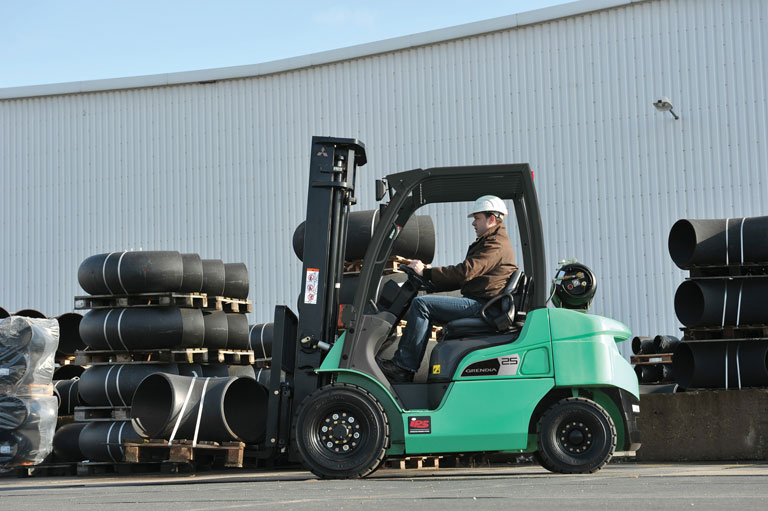
Diesel forklifts use a diesel engine, the same principle as a diesel van or HGV. They are typically the most powerful of the three and the most suited to heavy outdoor work.
The case for electric forklifts
Electric forklifts have come a long way. For many North East businesses, they are now the default choice for indoor operations, and the gap between electric and combustion performance has narrowed significantly over the past decade.
Zero emissions indoors
This is the most immediate advantage for any business operating in an enclosed environment. Electric forklifts produce no exhaust fumes, which means they are safe to use in food production, cold storage, pharmaceutical environments, and any warehouse where air quality matters. For operations already running ULMA stainless steel handling equipment for hygiene compliance, pairing that with an electric forklift is a logical step.
Lower running costs
Electricity is cheaper than LPG or diesel as a fuel source, and electric motors have fewer moving parts than combustion engines. That means lower energy costs and, over time, reduced maintenance expenditure. The servicing requirements for an electric forklift are generally less intensive than for a gas or diesel equivalent.
Quieter operation
Electric forklifts are significantly quieter than combustion alternatives. In busy warehouse environments, or anywhere with noise restrictions, that is a practical benefit as well as a more comfortable working environment for operators.
Lithium-ion technology
Newer electric forklifts increasingly use lithium-ion batteries rather than traditional lead-acid. Lithium-ion charges faster, lasts longer between charges, and does not require the same maintenance routines as lead-acid batteries. For operations running extended shifts, opportunity charging during breaks can keep a lithium-ion truck running throughout the day without a full battery swap.
The case for LPG forklifts
LPG remains a strong choice for operations that need flexibility and fast turnaround. It suits businesses that move between indoor and outdoor environments and cannot afford the downtime associated with battery charging.
Fast refuelling
Swapping an LPG cylinder takes a matter of minutes. There is no waiting for a battery to charge, which makes LPG forklifts well suited to multi-shift operations where continuous use is a priority. If your warehouse runs through the night or across back-to-back shifts, the refuelling speed of an LPG truck is a genuine operational advantage.
Indoor and outdoor versatility
LPG forklifts can operate both indoors and outdoors, provided there is adequate ventilation inside. That makes them a practical choice for operations that need a single truck type across mixed environments, without the outdoor limitations that some electric models carry.
Comparable performance to diesel
LPG is not a compromise. In terms of what it can lift and how fast it moves, an LPG truck holds its own against a diesel equivalent in most operational settings. If you need reliable grunt without the exhaust output of a diesel engine, LPG is worth serious consideration rather than being dismissed as a halfway house.
The case for diesel forklifts
Some jobs just need diesel. Not because it is old-fashioned, but because nothing else quite matches it when conditions get demanding.
Maximum power and capacity
Very heavy loads, uneven ground, exposed yard environments – these are the conditions where diesel earns its place. The torque is there when you need it, the lift capacities tend to be higher than electric or LPG equivalents, and the machines are built to keep working in conditions that would slow other trucks down.
Outdoor durability
Diesel forklifts are designed for outdoor environments. Building sites, timber yards, steel stockholders, and container handling operations all regularly rely on diesel trucks precisely because of the conditions they work in. For North East businesses in construction or heavy industry, diesel often remains the most practical choice for yard operations.
Fuel availability
Diesel is widely available and easy to store on site. For operations in more remote locations or those without easy access to LPG suppliers, that practical simplicity has real value.
Key questions to help you decide
The right power type comes down to a handful of practical considerations. Working through these honestly will point you in the right direction.
Where does the truck spend most of its time? Indoors in an enclosed space, electric is almost always the better choice. Primarily outdoors or on rough terrain, diesel or LPG. A mix of both, LPG or a robust electric model with appropriate tyres.
How are your shifts structured? Multi-shift operations with minimal downtime suit LPG. Single-shift operations with overnight charging windows suit electric well. Extended shifts with opportunity charging suit lithium-ion electric.
What are your load weights? For very heavy lifting, diesel offers the most power. For standard warehouse loads, electric and LPG are more than adequate.
Does your environment have air quality or noise requirements? If yes, electric is the clear choice. Our guide to forklift safety in the workplace covers the employer obligations around safe working environments that are worth understanding before you make any fleet decision.
What are your long-term running cost priorities? Electric has the lowest running costs over time. LPG and diesel have lower upfront complexity but higher ongoing fuel costs.
What Alcor recommends
We supply the full Mitsubishi forklift range, which covers electric, LPG, and diesel options across a wide variety of specifications. As we covered in our guide to Mitsubishi forklifts, the range is built for reliability and low total cost of ownership across all power types, so whichever route you choose, the machine will perform.
For most indoor warehouse operations in the North East, our honest recommendation is electric. The running costs are lower, the maintenance requirements are more straightforward, and the operational environment is better for your team. For businesses running mixed indoor and outdoor operations, LPG remains a strong and practical choice. For heavy outdoor work, diesel is hard to beat.
That said, every site is different. The best way to make this decision is to talk it through with someone who knows the equipment and has seen how different power types perform in real North East operations. That is exactly what our forklift services team is here for.
For a broader view of how your forklift choice fits into your overall warehouse setup, our guide to warehouse equipment for the North East is a good starting point. And if you are still weighing up whether to buy or hire whichever truck type you choose, our guide to forklift truck hire vs buying breaks down the decision in full.
Talk to Alcor about your forklift fleet
Whether you are replacing a single machine or reviewing your entire fleet, Alcor Handling Solutions has the experience and the range to help you make the right call. We have been supplying and supporting North East businesses for over 40 years, and we will always give you a straight recommendation based on what your operation actually needs.
Get in touch with the Alcor team to discuss which forklift power type is right for your site. We are happy to visit, assess your operation, and recommend the best solution.